What would stop you in your tracks? On a busy day when you are powering through your to-do list, or intensely focused on the job of momming or teaching or nursing or…you fill in the blank, what would make you come to a full stop and and look, and listen to a disembodied voice?
Would a bush on fire do it? Especially if it wasn’t burning down?
This is how the story begins- the story of the time God shared his eternal name with Moses.
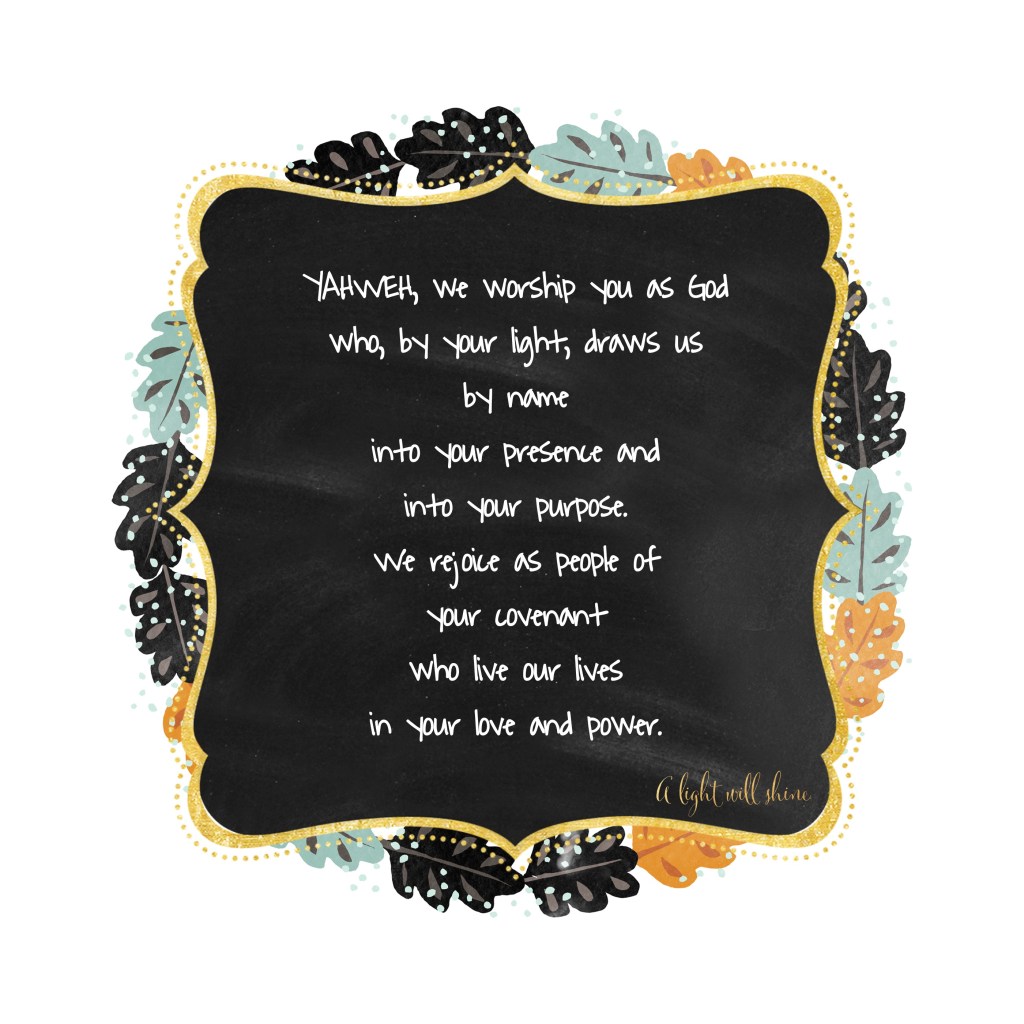
There is so much written about this name, the name we pronounce “Yahweh.” We are going to stay focused on our goal, though, of inviting the light of God’s presence into our lives through our study of his names. And this, the story of when the name was told, is a beautiful story of God’s light drawing one of his own into presence with him.
Moses had lived through a lot already on the day he heard his name called. He survived the genocide of his people to grow into an adult with a major identity problem. Son of Pharaoh? Israelite? In which world do you think Moses felt at home? Based upon his flight from it all, probably neither. The moment he heard his name, however, the healing presence of the LORD began its work in his life. In one moment, Moses is called by name and placed among a people chosen and covenanted. “Moses, Moses,” God called. “I am the God of your father —the God of Abraham, the God of Isaac, and the God of Jacob.”
Let’s pause here to bask in this light. Can you hear God calling your name? As a friend asked as we discussed this passage, what is your burning bush? How is God trying to get your attention, or my attention so that we can hear when he calls us by name, to remind us that we are among a people of covenant? The name Yahweh is a personal name, and God has worked throughout eternity so that each of us can know we are wanted and loved, and we are not alone- we are drawn into a community of the faithful.
But God, in his love and power, does not stop there. What God says next shows an even deeper commitment to us. For the whole story, you can read Exodus 3. But what God says next is, “I have seen, I have heard, and I am here. Now go.” God’s plan to rescue his people is a response to their need, but he wants to work through the very people he is rescuing. It’s his plan, accomplished in his power, but we get to participate.
What does Moses say? “Oh no- I can’t do that.” And God’s response to him is the same as his respond to us when we echo Moses. God always says, “I am with you.”
With Moses, God uses a literal light to call him. Today, a light still shines as God calls us by name. He places us in a community of faith and promise. He invites us into his work in our own world; he is with us as we do his will. And he has given us the treasure of his personal, eternal name so that when we cry out for help, or when we see our own burning bush and hear him calling us by name, we know who he is.
Yahweh, the God of the ages. The God of covenant. The God who sees and is near.

 prayersformychildren.org